
Facts About World War 2
It began with Japanese expansion in East Asia and ultimately ended with Japan's surrender in East Asia.
Japan started the conflict (in Manchuria, 1931) → Japan was the last to surrender (1945) → so Japan both began it and ended it.
The war began in Asia, circled the entire globe, and came full circle — ending exactly where the long journey began: in Asia.

Why Japan Attacked Manchuria
Japan invaded Manchuria in 1931 mainly because Japanese leaders saw the region as a combination of strategic territory, natural resources, and a buffer against the Soviet Union.
Japan is a small island nation with very few natural resources — almost no oil, little iron, not enough coal, and limited farmland.
By the early 1930s, Japan was growing fast and building a large military and industry — but they could not survive or grow without importing resources from elsewhere - and Manchuria, (northeast China) had exactly what Japan needed.
The immediate trigger was the Mukden Incident on September 18, 1931. Japanese officers deliberately blew up a small section of railway that Japan controlled and blamed Chinese forces for it. Japan then used the incident as a justification to launch a much larger military operation and occupy Manchuria.
Why Germany Attacked Poland
Germany attacked Poland on September 1, 1939 for three main reasons.

Hitler attacked Poland because he wanted to expand German territory eastward, destroy Poland as an independent state, and use Poland as a stepping stone toward his larger conquest of Eastern Europe.
The dispute over Danzig and the Polish Corridor provided a more immediate justification, while the agreement with Stalin made the invasion much easier to carry out.
On August 31, 1939, Nazi soldiers dressed as Polish troops and attacked a German radio station. Germany then announced: "Poland has attacked us!" — and used this fake attack as the official reason to invade the next morning.
The Similarity
Both Japan and Germany did EXACTLY the same thing — staged a fake attack, blamed their victim, and said "we are only defending ourselves!"
They used the same trick: make it look like the other side started it, so their own people and the world would accept the invasion.
The only difference: Japan got away with it in 1931 — nobody stopped them. Germany tried the same trick in 1939 — and this time, the world said "Enough!" → and that is how World War II began.
Japan and Germany attacked because two of them wanted more land, more resources and more power.
Japan Attacked Pearl Harbor
The Japanese military launched a sudden, surprise attack on the U.S. Naval Base Pearl Harbor in Oahu, Hawaii, on the morning of December 7, 1941. Japan launched a surprise attack with more than 350 aircraft from six aircraft carriers.
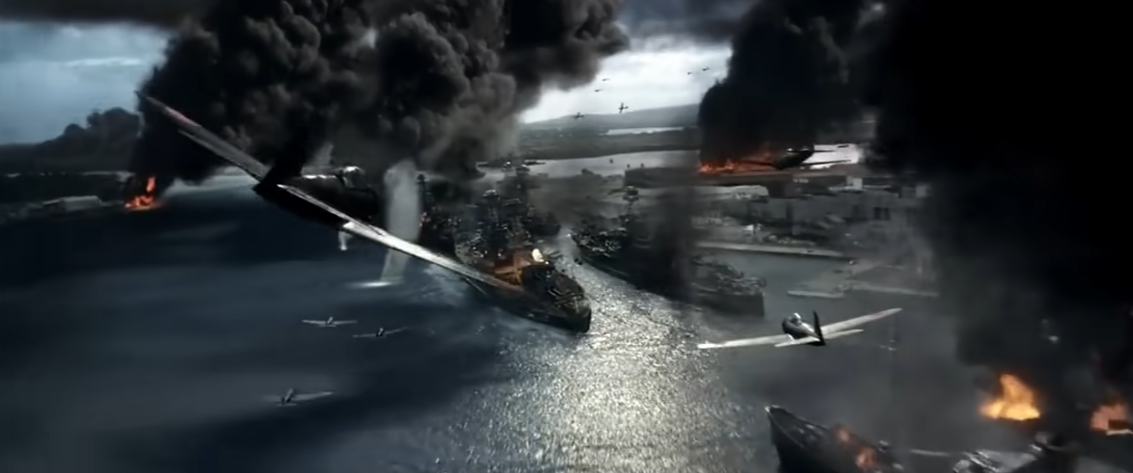
The 110-minute assault destroyed nearly 20 ships and 188 airplanes, killing 2,403 Americans and about 1,178 were wounded thus prompting the United States to enter World War II.
The following day, December 8, 1941, President Franklin D. Roosevelt asked Congress to declare war on Japan. The United States entered World War II.
Why Japan Attacked Pearl Harbor
Japan attacked Pearl Harbor because the U.S. cut off their oil — leaving them 6 months of fuel.
By 1941, Japan was fighting a massive, grinding war in China (the Second Sino-Japanese War, which began in 1937). This war was consuming vast amounts of resources, particularly oil and scrap metal, which Japan had to import.
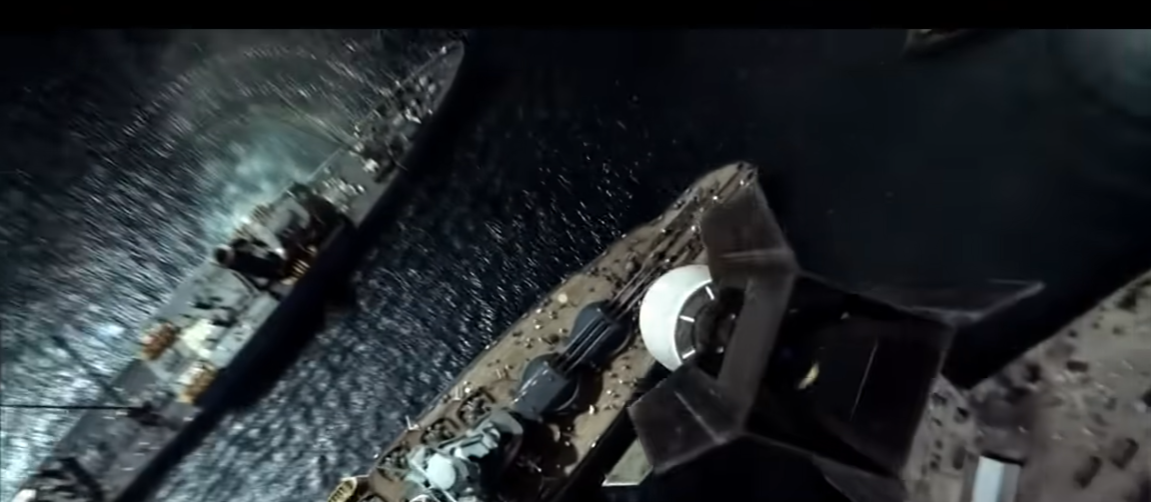
At that time, Japan relied on the United States for about 80% of its oil. Without oil, the Japanese navy, air force, and war machine would grind to a halt within a year. Japan felt it had two choices: comply with U.S. demands and abandon its empire, or seize the oil-rich territories of Southeast Asia by force.
Finally Japan decided to attack Pearl Harbor on December 7, 1941, as a desperate, preemptive strike to disable the United States Pacific Fleet. The goal was not to conquer the United States — Japanese leadership knew they lacked the manpower and industrial capacity for that — but to buy Japan the time and freedom to conquer Southeast Asia without American interference.
To solve its resource crisis, Japan targeted the "Southern Resource Area"—specifically the Dutch East Indies (modern Indonesia) for oil, and British Malaya for rubber and tin.
By the time Japan attacked Pearl Harbor in December 1941, most of what we now call Indonesia was under Dutch colonial rule. It was called the Dutch East Indies (Nederlands-Indië).
Japanese planners knew that attacking British and Dutch colonies would almost certainly draw the United States into the war, as the U.S. controlled the nearby Philippines and had pledged to protect its allies. Japan believed war with the U.S. was inevitable.
Before Pearl harbor
Before Pearl harbor, the United States was not yet a superpower — it was only the richest and largest economy, but stayed politically neutral and had a relatively small military. The "Superpower" title still belonged to Britain.
Best Naval Air Force
Japan had the best naval air force in the world at that moment — especially the A6M Zero fighter, which outperformed every U.S. fighter in 1941.

At the outbreak of the Pacific War, the Imperial Japanese Navy Air Service (IJNAS) was widely considered the most formidable carrier-based aviation force globally. While the United States and Great Britain had larger overall air forces and vast industrial potential, Japan held a distinct qualitative and operational edge in naval air power during that specific year.
Aircraft Carrier
Japan had more operational aircraft carriers than the United States at the time of the Pearl Harbor attack.

Japan had more carriers (10 vs 7) at the time of Pearl Harbor. But more importantly, they concentrated 6 big carriers for the attack, while zero U.S. carriers were in port — that was pure luck that saved them for the war ahead.
Industrial Capacity
However, U.S. ended with ten times more carriers than Japan! Japan built only 6 more carriers during the entire war — while the U.S. built ~140 new ones. This is an incredible speed.
U.S. went from 7 to about 150 carriers in 4 years. At peak production, they built one new carrier every week. Japan couldn't keep up — they couldn't even replace the ones they lost. That industrial power is why Japan lost the war.
Initially, just to confront Japan
Pearl Harbor is exactly what pulled the U.S. into WWII, and their FIRST declaration was against Japan. But within days, Germany & Italy declared war on the U.S. in return, so America ended up fighting in both Europe AND the Pacific.
US was neutral
The U.S. didn't plan to enter Europe's war — they came in because of Japan, and Germany dragged them into the European war as well. However, before the Pearl harbor, US sent supplies, weapons, ships to Britain & the Soviet Union - but no soldiers fighting.
No Pearl Harbor means no U.S. entry into WWII (at least not in 1941, and possibly never the same way).
German is more dangerous than Japan
Even though Japan attacked Pearl Harbor, the U.S. sent most of its army, weapons, and industrial strength to fight Germany and Italy — because Germany was seen as the bigger threat. Japan was fought mostly by the Navy and Marines while the main strength finished Germany first.
How Germany Was Defeated
Germany was defeated in 1945 after being attacked from both east (by Soviet Union) and west (by United States, Britain, Canada, France). And later from the above, round-the-clock bombing destroying cities, factories, fuel.
Germany wasn't defeated primarily because one country alone beat it. It was a massive Allied effort, with the Soviet Union doing the largest share of the ground fighting against Germany, while the United States, Britain and other Allies fought Germany in Western Europe, Italy, North Africa, the Atlantic, and elsewhere.
The majority of German military casualties occurred fighting the Soviet Union. The ground war was the decisive part of defeating Nazi Germany, but air and sea warfare were also essential to making that ground victory possible.
The USSR lost millions more military personnel than any other country (~8.7–11 million). Most of those losses occurred fighting Germany on the Eastern Front.
The Soviet Union's total deaths, including civilians, are generally estimated at around 26–27 million people. That means the Soviet Union suffered an extraordinary proportion of the overall human losses of WWII.
On the day Hitler died: only the Soviet Union was inside Berlin.
Atomic Bomb
United States did not have an atomic bomb available during the war with Germany, and the Soviet Union didn't have one either.
The first successful nuclear test in history, Trinity, happened in New Mexico on July 16, 1945 — more than two months after Hitler's death.
So there simply wasn't an operational atomic weapon available for the Battle of Berlin. That's why the first atomic bombs were ultimately used against Japan, not Germany.
The atomic bomb was not created by one person
The Manhattan Project involved tens of thousands of people—scientists, engineers, technicians, soldiers, construction workers, and administrators—working at multiple sites. Total people involved: ~129,000 people at its peak.

Oppenheimer led the scientific team at Los Alamos, but the atomic bomb was the product of a vast international scientific, engineering, industrial, and military effort known as the Manhattan Project.
Many of the scientists were born outside the United States and had immigrated there, often because of the rise of Nazi Germany and fascism in Europe.
Nazi Germany's persecution and expulsion of scientists helped drive some of Europe's greatest scientific minds toward the United States—and several of those scientists ultimately helped the United States develop the atomic bomb that would become one of the decisive technologies of World War II.
"First Lady of Physics"

To summarize the analogy:
If the Manhattan Project was building a race car, Dr. Wu didn't build the engine, the wheels, or the chassis. Furthermore, she didn't just go out and "find" the raw oil. Instead, she was the brilliant engineer who figured out how to build the microscopic oil refinery that extracted the pure, high-octane racing fuel. Without her refining process, the mechanics would have had an engine, but no fuel capable of making it run.
Because she was so amazing, she was the first living scientist to have an asteroid named after her.
Japan was the last major Axis power to surrender
When Germany surrendered in May, the United States did not stop fighting. Japan was still fighting in the Pacific, which is why the war continued for another four months until Japan's surrender in September 1945.
Italy surrendered in September 1943, Germany surrendered in May 1945, and Japan surrendered in August 1945.


No comments:
Post a Comment