Thursday, September 17, 2026

MaRV vs. HGV: The Real Difference Between Iran’s Fattah-1 and Fattah-2

 The Fattah-1 is Iran's first-generation hypersonic weapon, while the Fattah-2 represents a significant technological step forward by incorporating a true Hypersonic Glide Vehicle (HGV) that allows for far greater maneuverability and a more unpredictable flight path.

In other words, Fattah-2 is the more advanced, and more capable missile. Fattah-1 and Fattah-2 are probably Iran's most advanced publicly unveiled hypersonic-class missile systems.

iran fastest missile

Which is Better?

Facts About Ballistic Missiles & ICBM

 A ballistic missile is a missile that travels through the air along a high, curved trajectory, similar to throwing a ball very far—hence the name ballistic.

how icbm works

How it works

A ballistic missile generally has three phases:

Launch/boost 🚀 — Its rocket engines fire and accelerate the missile upward and forward.

Midcourse 🛰️ — After the engines stop, it can travel through the upper atmosphere or space mostly by inertia, following a ballistic trajectory.

Reentry/terminal ☄️ — The warhead comes back into the atmosphere at very high speed and descends toward its target.

So after the rocket engines stop, the missile doesn't need an engine constantly pushing it toward the target. Its trajectory is largely determined by its initial velocity, gravity, and the shape of its flight path.

One subtle point: saying it "relies on gravity" is slightly incomplete. Gravity pulls it toward Earth, but momentum is what keeps it moving forward. The combination of the two produces the characteristic curved/ballistic trajectory.

That's also why it's called a ballistic missile: much of its flight after powered ascent follows a trajectory governed by physics—especially gravity and inertia—rather than continuous powered flight.

Where The Engine Shut Downs

Aircraft Carriers Explained: Design, Operations, and Strategic Might

How Many Aircraft There In Aircraft Carrier & What Type is Mostly On Board

A U.S. aircraft carrier typically embarks an air wing of about 60 to 75 aircraft, though the carrier itself has a maximum capacity of around 90. The composition can vary by deployment, but the F/A-18E/F Super Hornet is the most numerous and serves as the backbone of the air wing.

us aircraft carrier facts

The interesting part is that most of them are fighter/attack aircraft.

The 'Dancing Missile' Explained: The Science Behind Iran’s Sejjil-2

 Facts About Iran's Sejjil-2 MRBM

The Sejjil-2 (also spelled Sajjil, or called Ashoura/Ashura) is a two-stage, solid-fuel, medium-range ballistic missile (MRBM) designed and built domestically by Iran. 

It is considered a significant technological leap for Tehran because it represents a shift away from older, slower-to-launch liquid-fueled designs.

Dancing Missile?

cobra tail missile sejjil-2 iran

The viral video showing a white, wavy/snake-like smoke trail in the night sky is almost certainly the Sejjil‑2 — Iran's two‑stage, solid‑fuel ballistic missile, widely nicknamed the "Dancing Missile" or "Cobra trail missile."

In fact, Iranian state media specifically described the June 2025 Sejjil-2 launch as producing a “serpentine” / “cobra-like” winding plume.

Sejjil-2 is an Iranian-made missile. It was developed and produced domestically by Iran as part of its effort to move from liquid-fueled missiles toward solid-fueled systems. 

The CSIS Missile Defense Project describes Sejjil as a “domestically designed and built by Iran” two-stage solid-propellant medium-range ballistic missile.

Facts About Hypersonic Missiles - How It Works

How Hypersonic Missile Works

The easiest way to understand a hypersonic missile is to follow it from launch to impact.

how hypersonic missile works

First, an important point: “hypersonic” means traveling at Mach 5 or faster. But a missile doesn't have to use a special engine throughout its flight to be hypersonic.

There are two major modern types:

  • Hypersonic glide vehicle (HGV)
  • Hypersonic cruise missile (HCM)
  • 1. Hypersonic glide vehicle

    The basic sequence is:

    🚀 Rocket launches
    ↓
    🚀 Accelerates to enormous speed and altitude
    ↓
    🛸 Glide vehicle separates
    ↓
    🌎 Enters the atmosphere
    ↓
    🛸 Flies at Mach 5+ while maneuvering
    ↓
    🎯 Target

    The rocket's job is mainly to give the glide vehicle altitude and velocity.

    Once released, the glide vehicle doesn't need a conventional rocket engine continuously pushing it. It uses its enormous existing velocity and aerodynamic lift to travel through the atmosphere.

    Think of throwing a paper airplane extremely hard from a great height—but obviously at vastly higher speed and with a sophisticated aerodynamic control system.

    Wednesday, September 16, 2026

    Facts About The US, China, and Russia's Most Powerful Fighter Jets

     F-22 Raptor - The US No 1 for Air Superiority

    Lockheed Martin F-22 Raptor is unmatched in dogfights and stealth. It features supercruise ability (flying supersonic without afterburners) and extreme agility.

    f-22 raptor air superiority

    Lockheed Martin | 5th Generation | USAF only

    Top speed: Mach 2.25 (~1,500 mph / 2,410 km/h)

    Supercruise: Mach 1.8+ without afterburner — unique among U.S. fighters

    Stealth: Lowest radar cross-section of any operational fighter

    Key strengths: Thrust vectoring for unmatched maneuverability, AN/APG-77 AESA radar, internal weapons bays (6× AIM-120 + 2× AIM-9)

    Status: Entered service 2005; ~187 built; production ended 2011; never exported

    Role: Air dominance — designed to defeat any enemy aircraft.

    How Powerful Is the F-16? Specs, Variants, and Combat Record

    Facts About F-16 Fighting Falcon

     The F-16 Fighting Falcon is a 4th-generation fighter aircraft, but modern upgraded versions are often described as 4.5-generation fighters. Despite being designed in the 1970s, it remains one of the most widely used and combat-proven fighter families in the world.

    Its strength is that it combines high speed, excellent maneuverability, modern weapons, and relatively affordable operating costs. In the hands of a well-trained pilot, a modern F-16 can be a very dangerous opponent.

    us fighter jet f16

    What generation is each F-16 version?

    MANPADS Explained: How Shoulder-Fired Missiles Work and Their Global Impact

     What is MANPADS

    MANPADS means Man-Portable Air-Defense System. They are small, portable surface-to-air missile (SAM) systems designed to be carried and operated by a person or a small team, often from the shoulder.

    This is a small anti-aircraft missile that soldiers can carry with them.

    How it works

    A typical MANPADS looks roughly like a long tube:

    Soldier → launcher → missile → aircraft

    The missile is designed primarily to attack low-flying aircraft, helicopters, drones, cruise missiles and other aircraft operating relatively close to the ground.

    Many well-known MANPADS use an infrared seeker. In simple terms:

    1. The operator aims the launcher toward an aircraft.
    2. The missile's seeker detects heat associated with the aircraft, especially its engines/exhaust.
    3. After launch, the missile guides itself toward the target.
    4. The warhead detonates when it reaches the aircraft.

    Other MANPADS use different guidance methods, including command guidance or laser beam riding.

    facts about manpads

    The Aircraft's Heat & The Flare

    How Iranian Cheap Drone Shahed-136 Works

     Who made the Shahed-136?

    The Shahed-136 (also spelled "Witness-136") was designed and developed in Iran, principally by Shahed Aviation Industries, with production associated with Iran's HESA aircraft industry, an Iranian state-owned firm based in Isfahan, Iran. 

    It entered service around 2021. CSIS identifies it as an Iranian-designed and produced one-way attack UAV.

    Russia initially purchased hundreds of ready-to-fly Shahed-136 drones directly from Iran and used them in Ukraine — but rebranded them "Geran-2" to try hiding their Iranian origin. Russia later bought thousands and began licensed production under the name Geran-2, but the design is originally Iranian.

    how shahed-136 drones work

    J-10C vs. Rafale: Has China’s Lightweight Fighter Met Its Match?

    The Chengdu J-10 "Vigorous Dragon"

     The Chengdu J-10 is a solid 4.5-generation lightweight multirole fighter — capable, agile, cost‑effective, and China’s first fully indigenous modern fighter — but it sits clearly behind 5th‑gen jets and has meaningful tradeoffs vs. heavier Western/European peers.

    China’s J-10 is actually a very interesting fighter because it started as a relatively conventional 4th-generation aircraft but evolved into the J-10C, which is a highly modern 4/4.5-generation multirole fighter.

    china 4 generation fighter plane

    Why Yemen is Divided: History, Sects, and the Road to Civil War

    Facts About Yemen 

    Size and Population

    The population of Yemen is approximately 40.6 million. Yemen has more people than Saudi Arabia, even though Saudi Arabia is much wealthier and more developed.

    map location of yemen

    Yemen ranks second in size and first in population among the seven countries of the Arabian Peninsula.

    Yemen is generally considered one of the poorest Arab countries, and by several economic measures it is at or near the very bottom. The World Bank reported that Yemen's economy had suffered a severe decline after years of conflict.

    Yemen's population is very unevenly distributed. Most Yemenis live in the western and west-central parts of the country, especially in the mountainous highlands around the capital, Sana'a. The eastern part of Yemen is much more sparsely populated because it consists largely of dry desert.

    Facts About Ali Hosseini Khamenei, Iran's Supreme Leader

    Ali Khamenei was Iran's Supreme Leader from 1989 until his death in February 2026. He was the country's most powerful political figure, with influence over the military, judiciary, parliament, presidency, and major foreign-policy decisions.

    Sayyid Ali Hosseini Khamenei was the second and longest-serving Supreme Leader of Iran — spanning roughly 36½ years. He was born 19 April 1939, in Mashhad, Iran — into a modest religious family; a descendant of the Prophet Muhammad (Sayyid).

    The man who shaped the Islamic Republic after its founder Khomeini died. He survived war, assassination, sanctions, and decades of isolation, only to die in a direct foreign military strike on his compound.

    rise and fall of ali khamenei

    Operation Epic Fury: U.S. Air Operations, Base Losses, and Energy Impacts

    Operation Epic Fury

    On February 28, 2026, under Operation Epic Fury, the U.S. used a very large mix of aircraft. It wasn't just aircraft from the carrier. The Pentagon's March 16 fact sheet lists B-1, B-2, B-52, F-15, F-16, F/A-18, F-22, F-35, A-10, EA-18G, plus support, reconnaissance, tanker, transport and unmanned aircraft.

    united states most advanced fighter jets f35

    The main combat aircraft:

    AircraftMain roleUsed against Iran?
    B-2 SpiritStealth heavy bomberYes
    B-1B LancerHeavy bomberYes
    B-52HHeavy bomberYes
    F-35A/CStealth multirole fighterYes
    F-15E Strike EagleFighter/strikeYes
    F-16Multirole fighterYes
    F-22 RaptorAir superiority/stealth fighterYes
    F/A-18Carrier fighter/strikeYes
    A-10Ground attackYes
    EA-18G GrowlerElectronic warfareYes

    Facts About the Strait of Hormuz: Energy, Trade, and Strategy

    Facts About Straits of Hormuz

    The Strait of Hormuz is a narrow but extremely important sea passage between Iran and Oman. It connects the Persian Gulf to the Gulf of Oman and the Arabian Sea, and ultimately the wider Indian Ocean.

    straits of hormuz location map

    Where is it?

    Think of it like a gateway:

    Persian Gulf → Strait of Hormuz → Gulf of Oman → Arabian Sea → Indian Ocean

    Iran is on the north side, while Oman controls territory on the south side, including the Musandam Peninsula.

    Who Are the Houthis? A Simple Guide to Yemen’s Armed Movement

    Who are the Houthis?

    The Houthis are a Yemeni political and armed movement that controls large parts of northern Yemen. Their formal name is Ansar Allah (“Supporters of God”).

    The Houthis emerged in northern Yemen and began as a religious and political movement among Yemen's Zaydi Shi'a community in the 1990s. They were founded and led by members of the al-Houthi family, particularly Hussein Badreddin al-Houthi.

    Their movement grew because of opposition to Yemen's government, which they accused of corruption, authoritarianism, and being too closely aligned with Saudi Arabia and the United States.

    saudi houthis war

    They are supported by Iran, which has provided weapons, technology, training, and other assistance, although the Houthis have their own Yemeni leadership and interests rather than simply being an Iranian military unit.

    Today, the Houthis control Sanaa and much of northwestern Yemen, although they do not control the entire country.

    Facts About Esmail Qaani - Commander of the Quds Force

     Esmail Qaani (Ismail Qaani) is a senior Iranian military commander and a brigadier general in the Islamic Revolutionary Guard Corps (IRGC). He is best known as the commander of the Quds Force, the IRGC unit responsible for Iran's military and intelligence activities outside Iran.

    who is esmail qaani

    Qaani was born in 1957 in northeastern Iran. He joined the IRGC around the time of the Iran–Iraq War. He eventually became involved with the Quds Force.

    What does the Quds Force do?

    Think of the Quds Force as the IRGC's overseas operations arm. It works with and supports organizations allied with Iran outside the country, including groups in Iraq, Lebanon, Syria and Yemen.

    The European Union describes Qaani as commander of the Quds Force and has accused the organization under his command of supporting the transfer of Iranian missiles and drones to regional armed groups.

    Why the UAE Bore the Brunt of Iranian Strikes (Despite Qatar Hosting CENTCOM)

     Which Gulf Arab Countries Host The Most Important US Facilities

    Among the Gulf Arab countries, the four most important hosts of U.S. military infrastructure are generally Qatar, Bahrain, Kuwait, and the UAE. Together they form the core of the U.S. basing network around the Persian Gulf.

    location and map of arab gulf countries

    1. Qatar — Probably the most important air-power hub.

    • Around 10,000 U.S. personnel.

    • Al Udeid Air Base — Arguably the most Important U.S. Base in the Entire Middle East.

    • Forward Headquarters of U.S. Central Command (CENTCOM) — directs all U.S. military ops across 21 nations.

    • Combined Air Operations Center — the nerve center for every U.S. air mission in the region.

    • Largest U.S. airbase in the Middle East; supports ~1,000+ sorties daily.

    Does the World Rely on Gulf Oil as Much as You Think?

    Does The World Get Its Oil Mainly From The Gulf Countries?

    The answer is no, not the majority of world production, but yes, they dominate global oil exports (the oil that actually crosses borders).

    the oil from gulf countries

    World produces ~105 million barrels/day (mb/d). Gulf countries produce about 1 in 4 barrels of world total — not the majority. The US alone produces roughly as much as all Gulf countries combined.

    Using 2025 production data, the United States was actually the world's largest oil producer, followed by Saudi Arabia and Russia.

    Tuesday, September 15, 2026

    How Has Iran Retaliated Against The US

     After Ali Khamenei was killed, what was the first things Iran did

    After Ali Khamenei was killed in the U.S.-Israeli strikes on February 28, 2026, Iran's first actions were essentially about keeping the state functioning, securing military command, and preparing retaliation.

    Confirm Khamenei's death and announce mourning

    Iranian state media officially confirmed his death in the early hours of March 1. The government declared a period of national mourning.

    khamenei funeral

    Prevent a leadership vacuum

    Because the Supreme Leader had been killed together with several senior officials, Iran immediately needed a temporary mechanism for supreme authority. An interim Leadership Council was established, involving Ayatollah Alireza Arafi, President Masoud Pezeshkian, and Chief Justice Gholam-Hossein Mohseni-Eje'i.

    The military and IRGC continued operating

    Iran did not stop functioning militarily simply because Khamenei was dead. The Revolutionary Guards and remaining command structure continued directing Iran's response. This was important because the country was already under attack.

    Facts About Khamenei's Death - Who Betrayed Him

     How The US Found Khamenei

    Khamenei’s movements are not tracked by a single traitor. Instead, they are exposed by a combination of advanced Israeli technical surveillance and massive human infiltration of Iran’s security apparatus. It is a system where technology and spies reinforce each other.

    khamenei dead facts

    The Traitor Inside The Inner Circle - A High-Level Insider Betrayed the Meeting

    CIA had a recruited asset — someone inside Khamenei's closest protection or administrative circle — who passed the exact, top-secret meeting details directly to the U.S.: when, where, who would be there, and that Khamenei would be above ground, not in his bunker.

    In one stunning example, the very head of an Iranian counter-intelligence unit—the group created specifically to catch Israeli spies—was himself an Israeli agent. He reportedly had at least 20 double agents working under him.

    Iran's own Foreign Minister (Araghchi) publicly confirmed in July 2026: "The main traitor who gave the information is still inside Tehran's highest circles — still not caught." He warned: "This person sits among us, attends our meetings, and has access to all our top secrets."

    Facts About the Arabian Peninsula: Populations, Economies, and Energy Reserves

    Facts About Arabian Peninsula

     The Arabian Peninsula is the largest peninsula in the world by area, but it is not generally considered the longest by length.

    arabian peninsula

    The Arabian Peninsula is home to Saudi Arabia, Yemen, Oman, the United Arab Emirates, Qatar, Bahrain, and Kuwait, as well as parts of Jordan and Iraq.

    From Hormuz to Bab el-Mandeb: The Escalating Battle for Middle East Oil Routes

    Facts About Houthis

     Founded in Early 1990s, emerged as a revivalist/community movement among Yemen’s Zaydi Shia minority (roughly 30–35% of population; Zaydism is distinct from Twelver Shia).

    Named after the founder Hussein al-Houthi, who began resisting government marginalization; killed by Yemeni forces in 2004. His family and followers continued the movement.

    Core early grievances: Discrimination under the central government, corruption, foreign influence, and weak governance in northern Yemen.

    houthis attacking saudi arabia oil

    Facts About Ahmad Vahidi - IRGC's Commander-In-Chief

     Ahmad Vahidi is one of the old-generation commanders of Iran's Islamic Revolutionary Guard Corps (IRGC). He is particularly important because he was one of the earliest commanders of the Quds Force, long before Qassem Soleimani and Esmail Qaani.

    ahmad vahidi facts

    Born in 1958, He joined the IRGC in 1979, shortly after the Iranian Revolution. He became involved in IRGC intelligence and was a senior intelligence official during the Iran–Iraq War.

    In 1988, he became the commander of Quds Force, making him its first commander in the organization's early form. He remained in the position until 1997. Qassem Soleimani succeeded him in 1997. Qaani later became Soleimani's deputy.

    Vahidi served as Iran's defense minister from 2009–2013 under President Mahmoud Ahmadinejad. He later served as interior minister from 2021 to 2024.

    Facts About Iraq War

     How Iraq War Started

    The Iraq War (2003) began when the United States and its allies invaded Iraq on March 20, 2003, overthrowing Saddam Hussein's government.

    The Iraq War started because the U.S. and UK believed Iraq had hidden weapons of mass destruction and supported terrorism — claims that were later disproven — and chose to invade without final UN approval.

    facts about iraq war

    How many country went to war with Iraq

    United States, United Kingdom, Australia, Poland, Denmark, Spain, others versus Iraq alone.

    Many other countries publicly supported the war (about 49 nations in the "Coalition of the Willing"), they offered political support, use of airspace, bases, or small troops later during the occupation.

    The invasion did not have explicit authorization from the UN Security Council. The US and UK argued that existing UN resolutions, particularly those concerning Iraq's weapons programs, provided the legal basis for military action, while many other countries and international lawyers disputed that interpretation.

    Monday, September 14, 2026

    Facts About Iran-Iraq War

    What Caused Iran Iraq War

    The Iran–Iraq War (1980–1988) was caused by a mix of border disputes, religious/ideological rivalry, power-seeking, and regional fear — all exploding together.

    The main causes were:

    The Iranian Revolution (1979): After Ruhollah Khomeini came to power, Iran promoted its Islamic revolutionary ideology. Iraqi leader Saddam Hussein feared this would inspire Iraq's majority Shiite population to rebel against his Sunni-led Ba'athist government.

    Border disputes: Iran and Iraq had long disagreed over control of the Shatt al-Arab waterway, an important shipping route to the Persian Gulf. Saddam wanted to reverse concessions Iraq had made in the 1975 Algiers Agreement and gain greater control of the area.

    Opportunity after Iran's revolution: Iran's military had been weakened by the revolution, purges, and internal unrest. Saddam believed Iran was vulnerable and expected a quick victory if he invaded.

    Regional power ambitions: Iraq sought to become the dominant power in the Persian Gulf and hoped to weaken Iran permanently, including gaining influence over the oil-rich Iranian province of Khuzestan.

    iran iraq war facts

    Facts About 9/11 Attacks

     What Were the 9/11 Attacks?

    The September 11 attacks (widely written as 9/11) were four coordinated terrorist suicide attacks carried out by the militant group al-Qaeda against the United States on Tuesday, September 11, 2001. Nineteen hijackers seized control of four commercial passenger jets, using them as weapons.

    911 wtc attacks

    Both Twin Towers collapsed within hours due to structural failure from the fires ignited by jet fuel.

    FlightTimeTarget / LocationOutcome
    American Airlines Flight 118:46 AMNorth Tower, World Trade Center, NYCCrashed into the tower
    United Airlines Flight 1759:03 AMSouth Tower, World Trade Center, NYCCrashed into the tower
    American Airlines Flight 779:38 AMThe Pentagon, Arlington, VirginiaCrashed into the west side
    United Airlines Flight 93~10:03 AMLikely U.S. Capitol or White HousePassengers fought back; crashed near Shanksville, Pennsylvania

    Casualties

    Nearly 3,000 people were killed, making 9/11 the deadliest terrorist attack in world history - World Trade Center: 2,753, Pentagon: 184, and Flight 93: 40.

    Victims came from more than 90 countries. Hundreds of emergency workers — including 343 firefighters and 60 police officers — died while trying to rescue people.

    Facts About 2001 US-Afghanistan War

    What Caused The 2001-2021 Afghanistan War

    The 2001-2021 Afghanistan War was primarily caused by the September 11, 2001 terrorist attacks and the Taliban government's refusal to hand over Osama bin Laden.

    During the 1990s, Al-Qaeda (an Islamist militant group) established a major presence in Afghanistan under the Taliban government. Its leader, Osama bin Laden, was living there.

    us afghanistan war


    After the 911 attacks, the U.S. demanded that the Taliban regime (which ruled most Afghanistan since 1996) surrender bin Laden and other al-Qaeda leaders, shut down al-Qaeda training camps, and prevent Afghanistan from being used as a terrorist base.

    The Taliban did not simply agree to those demands. There were negotiations and offers involving possible handover, but the U.S. considered the Taliban's response inadequate.

    The Taliban, an ultra-conservative Islamist movement that controlled ~90% of Afghanistan by 2001, declined U.S. demands to extradite bin Laden and close terrorist training camps. They offered only to try him under Afghan (Islamic) law—something the U.S. rejected.

    The U.S. and its allies declared Afghanistan a "state sponsor of terrorism" and a direct national security threat.

    Facts About Saddam Hussein

    Facts About Saddam Hussein

    Father: Hussein Abd al-Majid — he died (or disappeared) before Saddam was born in 1937. The exact circumstances of his death are unclear.
    Mother: Subha Tulfah al-Mussallat — she raised Saddam after his father's disappearance/death.

    Saddam was born on April 28, 1937, in Al-Awja, near Tikrit, Iraq.

    An important part of his childhood is that his father was absent, so Saddam spent part of his early childhood with his maternal uncle, Khairallah Talfah, who became a major influence on him. Khairallah was a strong Arab nationalist and later became an important figure in Saddam's political life.

    Interestingly, Saddam's future wife Sajida Talfah was Khairallah Talfah's daughter—so Saddam married his cousin, just as Hitler's parents were also cousins, although the family relationships were different in detail.

    iraq dictator saddam hussein

    Facts About Gulf War

    What Was the Gulf War?

    The Gulf War (1990–1991), also known as the Persian Gulf War or Operation Desert Storm, was a major international conflict triggered by Iraq’s invasion of Kuwait. It was fought between Iraq and a coalition of 35 countries led by the United States.

    On August 2, 1990, Iraq’s dictator Saddam Hussein ordered his army to invade and occupy Kuwait, its small, oil-rich neighbor. The invasion was swift — Iraq seized Kuwait in just two days and formally annexed it as Iraq’s "19th Province."

    gulf war facts

    How Long The Gulf War Ended

    Actual combat was about 6 weeks (January 17–February 28, 1991) and ground war was only about 4 days (February 24–28).

    However, the Iraq–Kuwait crisis lasted about 7 months from Iraq's invasion in August 1990 until the February 1991 ceasefire.

    Facts About Nuclear Treaty

    What Is a Nuclear Treaty?

    A nuclear treaty is a formal, binding agreement between countries to regulate, limit, reduce, or prevent the development, possession, testing, spread, or use of nuclear weapons and related technology. Its main goals are to prevent nuclear war, stop more nations from getting nuclear arms, reduce existing stockpiles, and promote the peaceful use of nuclear energy.

    nuclear ban treaty

    What if a country violates it after agreeing to it?

    Enforcement is complicated because there is no "world police" that automatically arrests a country for violating a treaty. Enforcement depends on united international pressure through the UN Security Council.

    For example, if a country secretly develops nuclear weapons in violation of its commitments, the consequences could range from international condemnation → inspections → sanctions → UN action, depending on the circumstances.

    So, the consequences can be loss of benefits (lose access to peaceful nuclear technology, fuel, trade, or cooperation), economic sanctions (freeze assets; ban trade, banking, oil/weapon sales), isolation, or military action. 

    So, whether a nuclear treaty is powerful and effective or not depends heavily on verification, international cooperation, and the willingness of other countries to enforce the rules.

    Facts About World War I

    What Caused World War I

    World War I was not caused by a single event, but was the result of a complex web of long-term tensions that had been building in Europe for decades, finally ignited by a single, dramatic act of violence.

    You can think of the causes in two categories: the deep, underlying issues that created a "powder keg" of tension, and the "spark" that set it off.

    Nationalism, imperialism, militarism, and tangled alliances created a giant powder keg. The assassination of Franz Ferdinand was the spark that lit the fuse — and the whole world exploded into war.

    what caused world war I

    The Underlying "Powder Keg" (Long-Term Causes)

    Militarism: European powers heavily glorified military strength and spent the decades before the war in an arms race, especially between Britain and Germany with their navies. This created a culture where war was seen as a valid way to resolve disputes, and complex military plans made it difficult to step back from a crisis once it started.

    A System of Alliances: Europe was divided into two main alliance blocs. These alliances, intended to maintain peace, instead ensured that any local conflict could rapidly escalate into a general European war.

    • The Triple Alliance: Germany, Austria-Hungary, and Italy (though Italy would later switch sides).

    • The Triple Entente: Britain, France, and Russia.
    Imperialism: Competition for overseas colonies created intense rivalry and mistrust between the major powers, particularly Britain, France, and Germany. Crises over territories like Morocco in Africa had almost brought Europe to war in the years before 1914.

    Intense Nationalism: National pride was a powerful and aggressive force.
    • In Germany and France: The unification of Germany after its victory over France in 1870-71 left France bitter and seeking revenge for the loss of territory.

    • In the Balkans: The Austro-Hungarian Empire contained many Slavic peoples who sought independence. Serbia, with the support of Russia, wanted to unite all Slavic people in the region, which was a direct threat to Austria-Hungary's very existence. This made the Balkans the most volatile region in Europe.

    The "Spark" (The Immediate Cause)

    The immediate trigger for the war was the assassination of Archduke Franz Ferdinand, the heir to the Austro-Hungarian throne, on June 28, 1914, in Sarajevo. He and his wife were killed by Gavrilo Princip, a Bosnian Serb nationalist who was part of a group backed by Serbian intelligence.

    central power in wwi

    This assassination set off a rapid chain reaction known as the "July Crisis":
    1. Austria-Hungary, blaming Serbia for the plot, issued a harsh ultimatum to Serbia.

    2. After Serbia partially rejected the ultimatum, Austria-Hungary declared war on Serbia on July 28, 1914.

    3. The system of alliances quickly pulled in the other major powers. Russia mobilized in support of Serbia, and Germany declared war on Russia to support its ally Austria-Hungary.

    4. Germany then declared war on France (Russia's ally) and invaded neutral Belgium as part of its war plan.

    5. Britain had a treaty to protect Belgium's neutrality and declared war on Germany on August 4, 1914.
    Within a few weeks, most of Europe was at war, and soon its global empires were drawn in as well, turning a local conflict into the First World War.

    Was the main villain and 'good guy' the same as world war 2?

    Germany fought against Britain in both World War I and World War II. In both wars: Germany lost and Britain was on the winning side.

    There was no clear "evil villain" in WWI. It was a war of empires — all major powers wanted more land, colonies, and power. Germany was aggressive, but Britain, France, and Russia also built huge empires and competed ruthlessly. Historians see WWI as a tragedy of rivalry, alliances, and mistakes, not a fight between pure good and pure evil.

    In WW2, this was a clearer fight between good and evil. Nazi Germany under Hitler had an ideology of hatred, racism, conquest, and mass murder — something that did not exist in WWI. That is why in WWII, Germany is seen as the clear "villain" in a way it was not in WWI.

    In WWI it was empire vs empire; in WWII it was freedom vs Nazi tyranny.

    britain dreadnought ww1

    Why Japan and Italy both switch and join Germany in WWII?

    Both Italy and Japan were on the winning side in WWI — but both felt cheated, mistreated, and blocked by Britain and France afterward. Italy was betrayed over land; Japan was humiliated over race and blocked from resources. Germany offered them what the old Allies refused: power, empire, and respect. That is why BOTH switched from the Allies to join Germany in WWII.

    Which country sacrificed most soldiers

    In WWI, the country that sacrificed the most soldiers was Russia — but Russia quit the war before it ended. Russia withdrew from the war in 1918 after the Bolshevik Revolution.

    Germany was not defeated by one country alone. It was defeated by the combined pressure of the Allies, especially France, Britain and the British Empire, United States, Russia, Italy, and other Allied countries. 

    russian army in ww1


    Russia drained Germany so much at the very beginning, followed by France, so Germany was actually weakened a lot before other allies came in. 

    Russia and France together broke Germany's strength long before the US became the final push. The US did not win alone — they arrived when Germany was already exhausted by Russia and France.

    In WW2, Soviet Union fought from start to finish and bore the brunt of the fighting — that's why it's fair to say the Soviets sacrificed the most and did the most to defeat Germany.

    Sunday, September 13, 2026

    Facts About Atomic Bomb & Hydrogen Bomb

    Facts About Atomic Bomb & Hydrogen Bomb

    Why the atomic bombs in 1945 were delivered by airplane

    No other delivery system existed at the time. There were no long-range guided missiles, nuclear-capable submarines, or accurate cruise missiles in 1945. 

    There was no time to design, test, and build a missile system or any other delivery method — the airplane was the only solution that could be made ready in time.

    Heavy bombers is the only option.

    Boeing B-29 Superfortress

    a b29 bombing

    By 1945, the Boeing B-29 Superfortress was the Allies’ most advanced bomber.

    It could fly over 5,000 km (3,250 miles) — enough to reach Japan from bases in the Marianas (Tinian Island). 

    It was one of the few planes large and strong enough to lift the 4–5 ton atomic bomb (“Little Boy” weighed ~4.4 tons; “Fat Man” ~4.5 tons). 

    It could fly high (~9–10 km) and fast enough to give the crew a chance to escape the blast after release.

    Facts About Hitler & Nazism

    What Is Nazism?

    Nazism — short for National Socialism — was the far-right, fascist, ultranationalist, and racist ideology of Adolf Hitler and the Nazi Party (NSDAP) that ruled Germany from 1933 to 1945.

    It was a totalitarian worldview that combined extreme nationalism, pseudoscientific racism, antisemitism, authoritarian dictatorship, territorial expansion, and violent opposition to democracy, communism, and liberalism.

    what is nazism

    Why is it called “National Socialism”?

    This is one of the confusing parts.

    The word “socialism” in the Nazi Party's name did not mean socialism in the Marxist sense. The Nazis deliberately used the word partly to attract workers and distinguish themselves from traditional conservative parties. Once Hitler came to power, the regime crushed independent socialist and communist organizations and imprisoned or killed many of their members.

    Facts about Vietcong

    north and south Vietnam in second indochina war
    The Vietcong were the supporters of the communist National Liberation Front in South Vietnam, these people tried to make South and North Vietnam one country (during the Vietnam war). They fought against the armed forces of the United States and the government of South Vietnam between 1959 – 1975.

    This term was originally applied by Diem’s regime to Communist troops left in hideouts in South Vietnam (about 10,000) after the Geneva Conference of 1954.

    The term also appeared in newspapers in Saigon beginning in 1956.

    The Viet cong, in full Vietnam Congsan (Vietnamese Communists in English), were trained and supported by the government of communist North Vietnam.

    The official Vietnamese history gives the group’s name as the National Liberation Front for South Vietnam or the Liberation Army of South Vietnam. Many writers shorten this to NLF (National Liberation Front).

    viet cong weapons
    After being trained, many of these members of Vietcong were sent to the South of Vietnam along the Ho Chi Minh trail in the early 1960s. For arms, special equipment and ammunition, the Vietcong depended on the Ho Chi Minh trail – a jungle route through Laos and Cambodia.

    The Vietcong were grouped into three categories: regular forces operating under the command of the communist leadership in the South, full time guerillas organized into companies serving under provincial leadership, and then a part time self-defense militia, composed of units orgnized into platoons and squads used primarily for village defense.

    Facts About World War 2

    Facts About World War 2 

    It began with Japanese expansion in East Asia and ultimately ended with Japan's surrender in East Asia.

    Japan started the conflict (in Manchuria, 1931) → Japan was the last to surrender (1945) → so Japan both began it and ended it.

    The war began in Asia, circled the entire globe, and came full circle — ending exactly where the long journey began: in Asia.

    ww2 facts

    Facts About Pearl Harbor

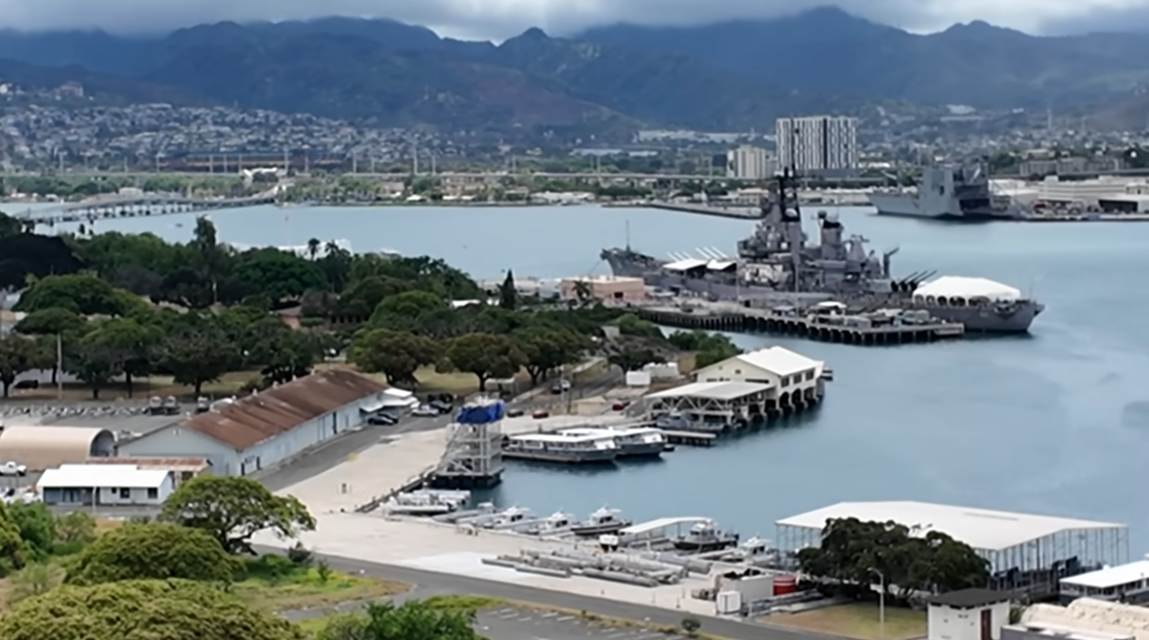
     Pearl Harbor is on the southern coast of the island of Oahu, Hawaii, United States, just about 8 miles (13 km) west-northwest of downtown Honolulu. 

    fakta mengenai pearl harbor

    So, Pearl Harbor is located on the island of Oahu, in the state of Hawaii, within the City and County of Honolulu. It functions as a lagoon harbor and an active military installation known as Joint Base Pearl Harbor-Hickam.

    It is best known as the site of the Japanese attack on December 7, 1941, which led the United States to enter World War II. Today, it remains an active U.S. naval base and is also home to several historic memorials, including the USS Arizona Memorial.